

Confidential · TradeWorks Academy × FIU · Prepared July 2026
Scan to view on mobile
tradeworksacademy.com/loan-docs
Share Lender Package
× Florida International University


Share this link with your lender
Executive Summary
America has a $68 billion problem. Every year, 600,000+ individuals return from incarceration. Within three years, two-thirds are rearrested. The recidivism cycle costs taxpayers $68 billion annually in incarceration, policing, judicial proceedings, and lost economic productivity — and yet the reentry infrastructure in this country is almost entirely government-dependent, fragmented, and unscalable.
TradeWorks Academy is the first private-sector solution engineered to capture a meaningful share of that $68 billion in failure cost and convert it into a high-margin, multi-revenue-stream asset class. We are not a nonprofit asking for a grant. We are a for-profit operating company presenting an institutional-grade real estate investment secured by diversified, government-backed cash flows — where the underlying asset is a transitional housing and workforce training campus that produces certified skilled trades professionals for an industry with 500,000+ unfilled jobs.
The model is vertically integrated across five links no other organization owns simultaneously: housing → behavioral health → accredited training → credentialing → direct employer placement. FIU provides the NCCER curriculum and university-branded credentials. Agape Network delivers the clinical behavioral health continuum. TradeWorks Academy operates the campus, manages the participants, and negotiates the employer contracts. The Center For Social Change provides 501(c)(3) fiscal sponsorship to unlock HUD Continuum of Care grants and philanthropic capital.
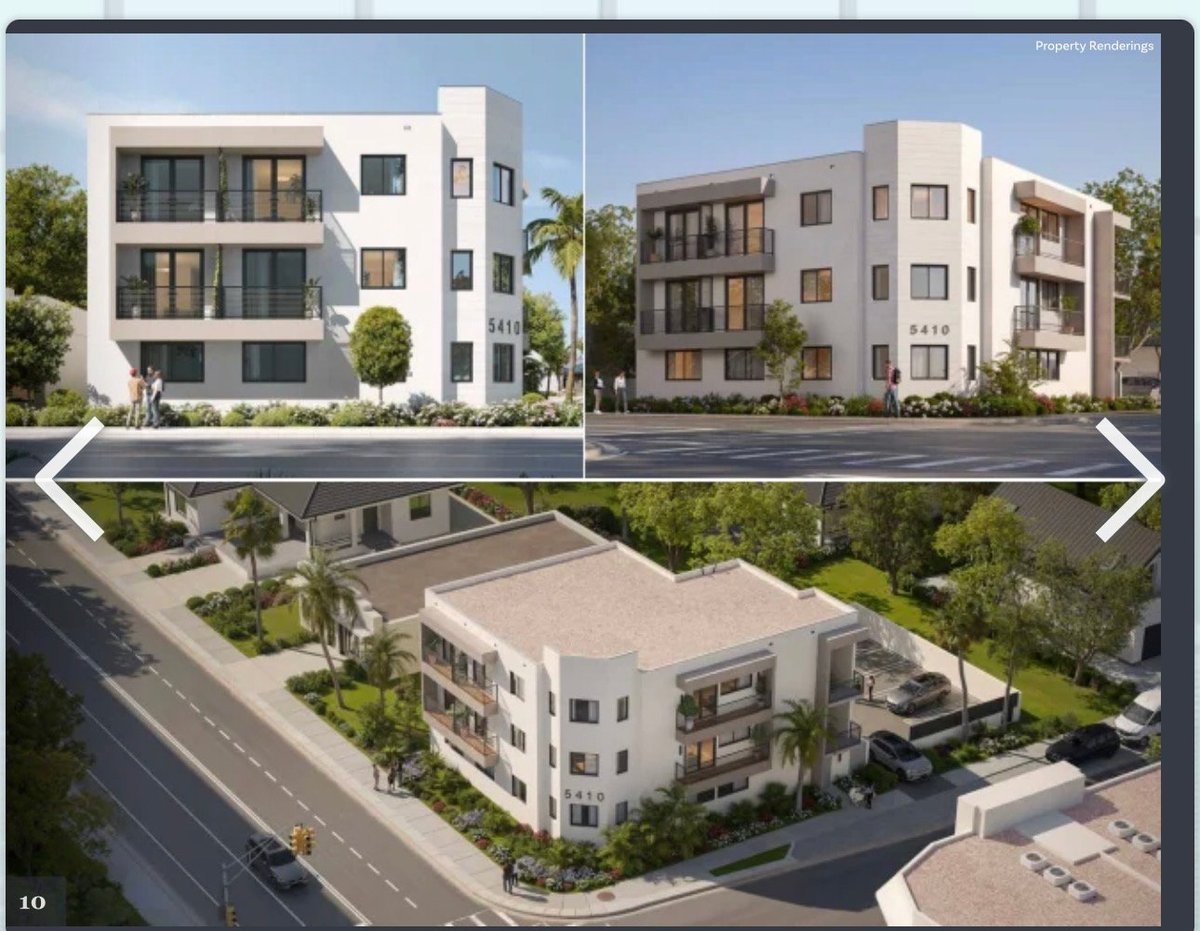
The result: a 14-week residential program where 30 men at a time live, train, and earn their way into $48K+ careers — with an 85%+ job placement rate, attrition below 15%, and a projected $3.9M–$14M in diversified annual revenue against $2.69M in total financing. The first campus opens August 2026 at 5410 NW 14th Avenue, Miami, Florida. By Year 10, the blueprint scales to 20+ campuses nationwide, a $25M–$40M real estate portfolio, and 10,000+ lives transformed annually.
Annual Recidivism Cost
Job Placement Rate
Attrition Rate
DSCR
FIU-Executed MOU
Top 50 public research university. NCCER curriculum. Per-participant revenue stream. Competitors cannot replicate this institutional partnership.
HUD CoC Eligibility
501(c)(3) fiscal sponsor unlocks renewable federal funding. 95%+ renewal rate. Predictable, government-backed cash flows.
5-in-1 Vertical Integration
Housing + behavioral health + accredited training + credentialing + employer placement. No competitor owns all five.
Licensable Blueprint
Proven model scales via university partnerships. Real estate portfolio appreciates. Operating company captures recurring fees.
"We are not asking you to finance a social program. We are offering you a first-lien position on a cash-flowing real estate asset with diversified, government-anchored revenue — in a market with zero institutional competition and infinite demand."
— TradeWorks Academy
The primary funding opportunity is the HUD Continuum of Care Program — a federal program administered by the U.S. Department of Housing and Urban Development designed to reduce homelessness by funding housing and supportive services.
While HUD CoC does not fund building purchases, it supports ongoing operations: personnel, case management, supportive services, housing operations, utilities, maintenance, transportation, insurance, and limited administrative expenses.
Purchasing a permanent facility — rather than leasing — creates a sustainable long-term community asset, expands organizational impact, and positions the nonprofit for future federal, state, and foundation funding opportunities.
CoC funding is intended to create lasting housing stability. Together with a permanent facility, it provides a sustainable funding foundation that helps participants successfully transition to permanent housing while building careers.
A planning estimate to be refined as the facility, staffing model, and program design are finalized.
Budget is preliminary and will be refined as facility, staffing, and program design are finalized.
The program leverages three key partnerships to create a comprehensive pathway from housing to employment, allowing the nonprofit to remain focused on its core mission of providing housing and supportive services.
A Top 50 public research university and one of the largest Hispanic-serving institutions in the United States, headquartered in Miami, Florida, with over 56,000 students. Through the Lennar Foundation Career Training Academy, FIU delivers NCCER-certified skilled trades curriculum — the gold standard in construction education — with full instructor credentialing, curriculum oversight, and university-branded certificate issuance. The FIU–TradeWorks partnership extends the classroom inside correctional facilities for pre-release instruction, ensuring participants begin earning credentials before they walk out the gate. Upon release, FIU continues as the academic backbone of the program: providing ongoing curriculum delivery, credential verification, and the institutional credibility of a nationally ranked research university. The executed MOU between FIU and TradeWorks Academy establishes a per-participant fee structure that creates a sustainable, enrollment-driven revenue stream while giving every graduate a university-backed credential that employers recognize and respect.
A Florida-based woman-owned small business (WOSB) and the operating engine of the entire pipeline. TradeWorks Academy LLC runs the 14-week residential skilled trades training program end-to-end — from participant intake and housing management to advanced hands-on construction training, paid internships, apprenticeship placement, and direct employer matching. Founded by Megan Lisak (18+ years luxury and commercial construction, workforce development) and Paulette "Tinkerbell" Pfeiffer (35+ years federal law enforcement, international reentry policy, nonprofit leadership), TradeWorks combines real-world construction expertise with deep institutional knowledge of the justice system. The Academy manages the 14th Ave Apartments campus, employs the live-in staff, coordinates with FIU on curriculum delivery, partners with Agape Network on behavioral health integration, and negotiates employer contracts that guarantee job placement at $48K+ average starting wages. TradeWorks is the for-profit entity designed for scale — owning the operating playbook, the employer relationships, and the licensing model that will expand this blueprint to 20+ campuses nationwide.
CARF-accredited community behavioral health organization headquartered in Miami, Florida, with over 40 years of service. Agape Network delivers a full continuum of licensed, evidence-based care: psychiatric evaluation and medication management, Moral Reconation Therapy (MRT), trauma-informed care, individual and group counseling, and reintegration programming tailored for justice-involved adults. Agape operates multiple residential campuses in Miami-Dade County and accepts Medicaid, Medicare, and most major insurance plans — making their services accessible to the reentry population TradeWorks serves. Their faith-informed, clinically rigorous model targets the behavioral drivers of recidivism at the root, ensuring TradeWorks participants are mentally and emotionally stable before entering skilled-trades training.
This is not a pilot. It is the first deployment of a model engineered to become the national standard for reentry-to-career — a vertically integrated pipeline that owns every link in the chain: housing, behavioral health, accredited training, credentialing, and direct employer placement. No other organization in America does all five under one roof.
Once the Miami campus proves the model, TradeWorks Academy will license the blueprint to university partners and 501(c)(3) sponsors across the country — Georgia State, Texas A&M, CUNY, and beyond. Each new campus is a franchise of transformation: a university-backed, employer-fed, HUD-funded engine that turns returning citizens into certified skilled trades professionals.
Properties by Year 5
Campuses by Year 10
Real Estate Portfolio Value
Lives Transformed Annually
Two women. Two lifetimes of expertise. One mission to reshape how America develops its workforce, restores its returning citizens, and builds the next generation of elite tradespeople.
Co-Founder · Policy Architect & Global Reentry Strategist
Paulette "Tinkerbell" Pfeiffer brings over 35 years of remarkable career achievements spanning federal law enforcement, international business development, criminal justice reform, and legislative policy. Her distinguished service as a DEA Special Agent gave her deep operational expertise in investigations, cross-border operations, and the systemic drivers of recidivism — but it was only the first chapter. She went on to build and lead international business development initiatives across Europe, Latin America, and the Caribbean, forging partnerships with government agencies, correctional institutions, and multinational organizations — giving her a global Rolodex and a fluency in navigating complex bureaucratic ecosystems that few reentry advocates possess. Fluent in five languages — English, Spanish, French, Italian, and Portuguese — Tinkerbell operates effortlessly across cultures, governments, and markets.
At TradeWorks, Tinkerbell serves as the strategic heavyweight — leading legislative advocacy, government relations, participant experience design, and the wraparound support architecture that transforms 30 men at a time from system-involved to career-ready. She architects the intake protocols, residential culture, behavioral readiness standards, and the full participant journey — from the moment a candidate is identified inside a correctional facility through graduation and job placement. Her 35 years of combined experience in federal law enforcement, international business development, reentry reform, and policy-making ensure that every element of the TradeWorks model is built on dignity, accountability, and proven reentry science.
Her approach fuses lived experience with systems-level strategy. She has consulted on transitional housing program design, reentry workforce pipelines, and peer-mentorship models for justice-involved populations across multiple countries. Separate from her work at TradeWorks, Tinkerbell is the driving force behind Tinkerbell's Kids, her 30-year nonprofit dedicated to protecting children — currently advancing landmark legislation with sponsors, committee momentum, and a clear pathway to law.
Looking forward, Tinkerbell's global network of government and institutional relationships gives TradeWorks a policy-driven competitive moat that no competitor can replicate. Her fluency across five languages and decades of cross-border operational experience ensure TradeWorks can navigate the complex bureaucratic ecosystems that determine reentry funding, correctional partnerships, and workforce development contracts at every level of government. When investors ask what makes TradeWorks defensible, the answer starts with Tinkerbell Pfeiffer.
Co-Founder · Luxury Construction & Revenue Architect
Megan Lisak brings 18 years of hands-on construction industry experience to TradeWorks Academy — spanning luxury residential design, commercial project management, crew leadership, estimating, and field operations across high-end markets. She has built, managed, and delivered complex construction projects where precision, aesthetics, and craftsmanship are non-negotiable, giving her an exacting eye for quality that few workforce development leaders possess. Her philosophy — "skill is the unified force of experience, intellect, and passion in their highest form" — defines TradeWorks' training methodology and its market positioning.
Having spent nearly two decades on active job sites, Megan understands the industry's labor crisis from the inside: the retiring workforce, the shrinking pipeline of qualified entrants, the 50%+ turnover rate, and the chronic mismatch between what traditional trade schools teach and what employers actually need on day one. But she sees something else most don't: an untapped revenue engine. By architecting direct partnerships with construction firms, developers, and trade contractors — who pay for priority access to TradeWorks' elite, job-ready graduates — Megan has built a placement pipeline that generates revenue while solving the industry's most painful problem.
At TradeWorks, Megan leads employer partnerships, branding, marketing, and housing design. She personally works with each cohort of men to ensure they are interview-ready, polished, and prepared to walk onto any job site with confidence — because her standard isn't "employable," it's "elite." She translates two decades of field knowledge into workforce readiness that employers consistently say is missing from the labor market.
Beyond the day-to-day, Megan's long-term vision is scaling TradeWorks into the private equity space — building a portfolio of workforce-integrated real estate assets where each campus generates uncorrelated returns through guaranteed university leases, employer-paid placement fees, and government per-diem reimbursement. As a mother to her son, Megan is building TradeWorks to be the legacy he can one day lead — an enterprise that proves you can restore lives, strengthen communities, and create generational wealth all at once. Her superpower is translating mission into margin.
Why This Team Works
Tinkerbell Pfeiffer knows the reentry pipeline from the inside — the barriers, the behavioral patterns, the points of failure. Megan Lisak knows the construction industry from the inside — not just the skills gap, but the revenue opportunity hiding in it: construction firms, developers, and contractors will pay a premium for elite, job-ready craftsmen who show up on time, take pride in their work, and need zero remediation. Together, they've built TradeWorks Academy as the bridge that neither the corrections system nor the construction industry could build alone. One co-founder solves recidivism. The other turns the trade crisis into a scalable, private-equity-ready asset class. The result: a model where returning citizens become the most sought-after, highest-earning craftsmen America's construction industry has ever seen — and investors get uncorrelated, multi-moat returns while funding it.
The institutional partner that unlocks HUD CoC funding, foundation grants, and tax-deductible philanthropy for TradeWorks Academy
Esq., MBA
Board President
Center For Social Change
Miami, Florida
Florida Bar No. 236543
William "Bill" R. Burdette is a Miami-based attorney, investment banker, and nonprofit leader whose career bridges corporate finance, community development, and institutional philanthropy. He brings to TradeWorks Academy a rare combination: Wall Street-grade financial structuring expertise combined with deep local nonprofit governance experience — exactly the profile needed to architect and oversee the HUD CoC funding pipeline, philanthropic capital strategy, and 501(c)(3) fiscal sponsorship that sustains TradeWorks Academy's transitional housing operations.
Education
Columbia Law School (J.D.) · University of Miami School of Business (MBA) · Northwestern University (B.A.)
Charity Services Centers
Partner & President. Created the "charity affinity program" connecting community banks with nonprofits — funding mechanisms applicable to TradeWorks' operating reserves.
Impact Deposits Corp
Founder, President & CEO. Financial product development and automated banking structures bridging for-profit and nonprofit capital markets.
The Fiscal Sponsorship: Center For Social Change — Miami's premier nonprofit coworking hub serving 100+ mission-driven organizations — serves as TradeWorks Academy's 501(c)(3) fiscal sponsor under Mr. Burdette's Board leadership. This relationship enables TradeWorks to apply for HUD Continuum of Care funding, private foundation grants, and tax-deductible donations — all while maintaining its for-profit operating structure. Mr. Burdette personally oversees the governance and compliance framework that makes this fiscal sponsorship possible.
TradeWorks Academy operates at the intersection of real estate, education, and behavioral health — powered by three world-class institutional partners.
Operating Engine & Employer Pipeline — Florida-based woman-owned small business (WOSB) running the 14-week residential skilled trades training program end-to-end. Founded by Megan Lisak (18+ years luxury and commercial construction) and Paulette Pfeiffer (35+ years federal law enforcement and international reentry policy), TradeWorks manages the flagship 14th Ave Apartments campus, employs live-in staff, coordinates NCCER curriculum delivery with FIU, integrates behavioral health support with Agape Network, and negotiates direct employer contracts that guarantee job placement at $48K+ average starting wages with an 85%+ placement rate. The operating playbook, employer relationships, and licensing model are engineered to scale to 20+ campuses nationwide.
Academic & Credentialing Partner — A Top 50 public research university and one of the nation's largest Hispanic-serving institutions, headquartered in Miami with over 56,000 students. Through the Lennar Foundation Career Training Academy, FIU delivers NCCER-certified skilled trades curriculum — the gold standard in construction education — with full instructor credentialing, curriculum oversight, and university-branded certificate issuance. The FIU–TradeWorks partnership extends the classroom inside correctional facilities for pre-release instruction and continues post-release as the academic backbone of the program. An executed MOU establishes a per-participant fee structure that creates a sustainable, enrollment-driven revenue stream while giving every graduate a university-backed credential employers recognize and respect. FIU's institutional credibility — as a nationally ranked R1 research university — de-risks the model for lenders and provides a competitive moat no other reentry program can replicate.
Behavioral Health Partner — CARF-accredited, Miami-headquartered community behavioral health organization with over 40 years of service. Offers a full clinical continuum: psychiatric evaluation and medication management, Moral Reconation Therapy (MRT), trauma-informed reintegration programming, and individual and group counseling. Operates multiple residential campuses in Miami-Dade County and accepts Medicaid, Medicare, and major insurance plans — ensuring accessible, evidence-based care that targets the root behavioral drivers of recidivism before participants enter skilled-trades training.
TradeWorks Academy — Transitional Housing & Training Facility Financing
William "Bill" R. Burdette, Esq., MBA
Board President — Center For Social Change | Miami, Florida | Florida Bar No. 236543
Columbia Law School (J.D.) · University of Miami School of Business (MBA) · Northwestern University (B.A.)
Mr. Burdette is a Miami-based attorney, investment banker, and nonprofit leader whose career bridges corporate finance, community development, and institutional philanthropy. He leads the Center For Social Change — Miami's premier nonprofit coworking hub serving 100+ mission-driven organizations — as its volunteer Board President. The Center serves as TradeWorks Academy's 501(c)(3) fiscal sponsor, enabling access to HUD Continuum of Care funding, private foundation grants, and tax-deductible donations that require a nonprofit fiscal agent.
Charity Services Centers
Partner & President. Created the "charity affinity program" connecting community banks with nonprofits — structured funding mechanisms directly applicable to TradeWorks' operating reserves.
Impact Deposits Corp
Founder, President & CEO. Financial product development, patent processing, and automated banking structures — bridging for-profit and nonprofit capital markets.
Center For Social Change
Volunteer Board President. Governs Miami's leading nonprofit hub. Personally oversees the fiscal sponsorship framework that makes TradeWorks eligible for HUD CoC, foundation grants, and tax-deductible donations.
[INSERT: Attach the executed MOU between TradeWorks Academy and Florida International University.] This MOU establishes FIU as the academic partner, providing NCCER-certified curriculum oversight, instructor credentialing, certificate issuance, and university-branded program credentials. The agreement demonstrates institutional commitment and provides a revenue stream through per-participant university fees paid to TradeWorks.
Attachment: FIU MOU — [Date Executed][INSERT: Attach the full annual operating budget for the facility.] The pro forma should include: gross revenue (FIU per-participant fees, employer placement fees, per-diem reimbursements, government contracts), operating expenses (staff salaries, utilities, maintenance, insurance, food, program supplies, transportation), debt service, and net operating income.
Annual Gross Revenue
$3.9M–$14M
Debt Service Coverage
1.50x+
[INSERT: Attach any executed contracts, MOUs, letters of intent, or formal commitments from partners, employers, or government agencies.]
TradeWorks Holdings LLC — a Delaware Series LLC — will hold title to the real estate in a dedicated property-owning Series, isolating the asset from the operating business for liability protection. Ownership of Holdings LLC: Megan Lisak (51%) and Paulette "Tinkerbell" Pfeiffer (49%).
Alternatively, for lenders that prefer direct operating-entity ownership: TradeWorks Academy LLC, the Florida for-profit operating company, can hold title directly. The Holdings LLC structure is preferred for multi-campus scaling and asset protection, but we are flexible based on lender requirements.
TradeWorks Academy LLC will operate the day-to-day program, including: participant intake and selection, skills training and NCCER curriculum delivery, employer placement coordination, facility management, and compliance oversight.
Key operational partners include: Florida International University (academic oversight, curriculum, credentialing), Agape Network (MRT counseling, behavioral health, wraparound services), and Center For Social Change (HUD CoC subrecipient, grant administration, participant referrals).
The borrower is a for-profit entity — TradeWorks Academy LLC (or TradeWorks Holdings LLC, depending on lender preference for direct vs. holding company ownership).
However, the loan is supported by a multi-entity ecosystem that provides diversified revenue streams:
For-Profit Borrower
TradeWorks Academy LLC — generates revenue from employer placement fees, FIU per-participant fees, and government contracts.
Nonprofit Partner
TradeWorks Academy Foundation (501(c)(3) — in formation) will access grants, HUD CoC funding, and philanthropic capital to support program operations and pay service fees to the LLC.
University Partner
FIU provides academic legitimacy, NCCER credentialing, and a contracted revenue stream through per-participant fees under the executed MOU.
The HUD CoC program is the single largest federal funding source for transitional and permanent supportive housing. It provides renewable annual grants covering: leasing costs, operating costs, supportive services, and project-based rental assistance. TradeWorks Academy's 501(c)(3) partner (Center For Social Change, as prime applicant; eventually TradeWorks Academy Foundation) will apply for CoC funding to cover a substantial portion of the facility's operating expenses — directly supporting debt service.
Eligible CoC Costs
Leasing, operations, supportive services, project-based rental assistance, HMIS data collection, and administrative costs (up to 10%)
Annual Renewal Structure
CoC grants are renewable annually with strong renewal rates (>95% for established programs), creating predictable multi-year revenue visibility
Per-Diem Reimbursement
Eligible for per-diem reimbursement rates comparable to Florida DOC transitional housing rates (~$45–$75/person/day)
The following documents should be assembled and included in the lender package. Check off each as completed.
Lender Tip: The strength of this package is the diversified, multi-source revenue model. No single funding stream represents more than ~30% of projected revenue — meaning debt service is supported even if one source underperforms. Highlight this in lender conversations.
The loan is structured with multiple, independently viable exit paths. No single exit is relied upon — the diversified revenue model ensures debt service coverage under any scenario.
Refinance into permanent HUD 221(d)(4) or FHA multifamily financing once stabilized — typically 12–18 months post-completion. 35–40 year amortization at below-market rates through HUD's multifamily accelerated processing.
Timeline: 12–18 Months
Refinance through a conventional lender once the property demonstrates 12+ months of stabilized NOI. With $185K+ NOI at a 7.1% cap rate, the property qualifies for conventional multifamily lending at market rates.
Timeline: 24–36 Months
The diversified revenue model — FIU lease payments, transitional housing per-diems, HUD CoC reimbursements, employer placement fees, and government contracts — generates sufficient cash flow to fully amortize the loan over a 7–10 year term without refinancing.
Timeline: 7–10 Years (Full Amortization)
Key Point: The loan is structured so that even in the absence of refinancing, the operating cash flows fully cover debt service at a 1.50x DSCR. The property's 7.1% cap rate on stabilized NOI of $185K compares favorably to multifamily averages in the Miami MSA (5.5–6.5%).